This is some text inside of a div block.
This is some text inside of a div block.
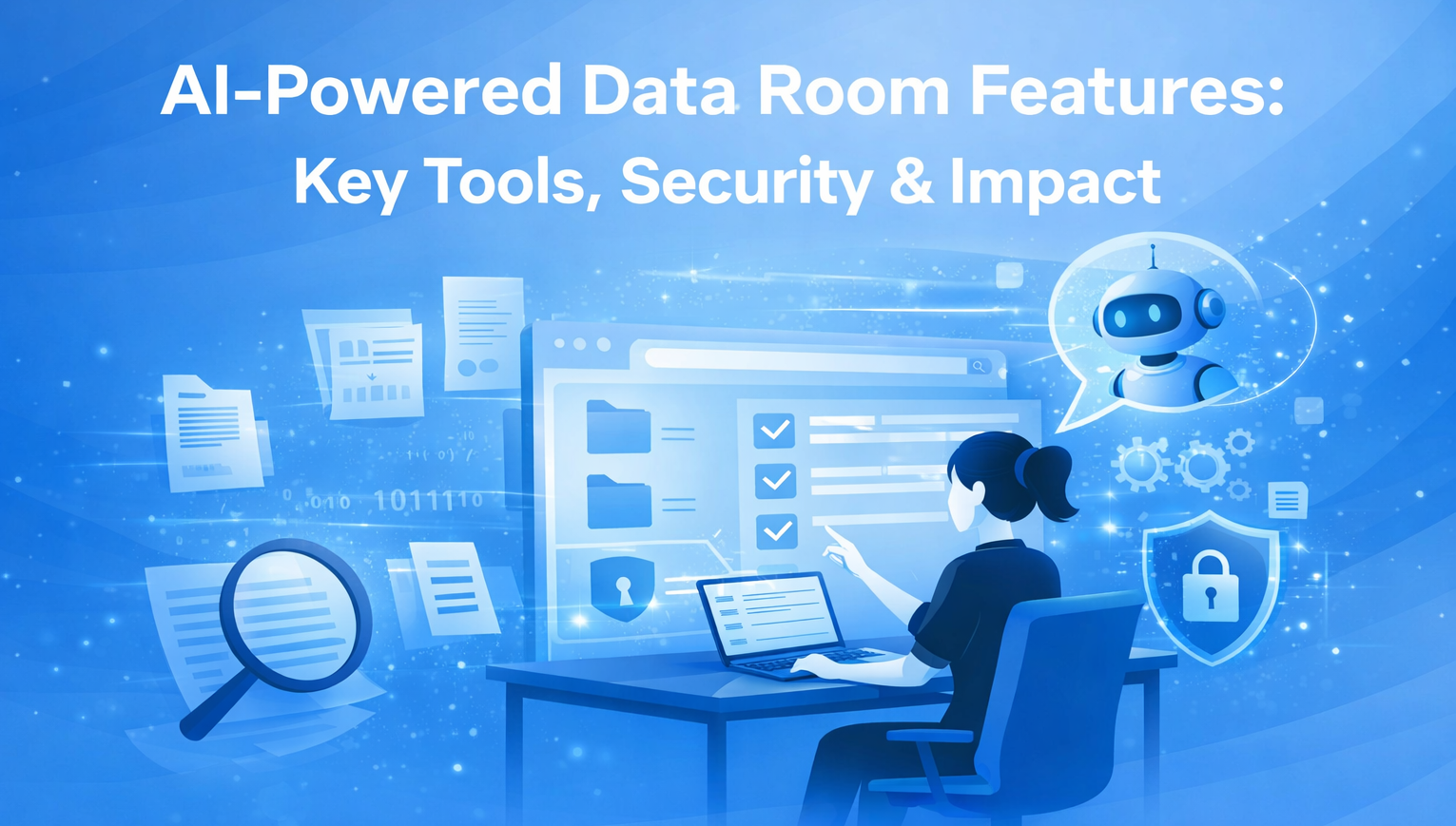
Data rooms have moved from physical spaces to digital platforms. Now, artificial intelligence is changing how companies manage sensitive information during deals and transactions.
Modern businesses need faster and more secure ways to organize and share confidential documents. They use these tools with potential investors, buyers, and partners.
AI-powered data room features automatically organize documents, enhance search capabilities, and provide intelligent insights that reduce deal completion time by up to 40%. These smart systems use machine learning to categorize files and extract key information.
AI can even predict what users might need next. Generative AI augments existing processes by extracting summaries from automated document analysis and improves search results by understanding context instead of just matching keywords.
The technology offers features like automated due diligence checklists and real-time collaboration tools. It also provides advanced security monitoring.
Companies across industries are adopting these solutions to streamline mergers, acquisitions, fundraising, and other complex transactions. These activities require careful document management.

Modern virtual data rooms use artificial intelligence to automate complex document tasks and improve data security. These features help companies process large amounts of information faster and maintain strict access controls.
AI systems sort and organize thousands of documents in virtual data rooms automatically. The technology reads document content and assigns categories based on type, subject, and relevance.
Generative AI assists by automatically categorizing and organizing documents during large transactions when data volumes become overwhelming. This removes the manual work that teams previously handled, which improves efficiency while also cutting costs.
Key organization features include:
The indexing process creates searchable metadata for each document. Users find specific information quickly without browsing through multiple folders.
Artificial intelligence identifies and redacts sensitive information in documents automatically, protecting confidential data while allowing authorized users to access necessary information. AI redaction tools scan documents for patterns like Social Security numbers, bank accounts, and personal names. The system blocks out or removes this sensitive content before sharing documents.
Common redaction targets include:
The technology maintains audit trails that show what information was redacted and when, giving companies the documented evidence required by data protection laws.
Virtual data rooms with AI offer advanced search functions that go beyond simple keyword matching. These systems understand context and can find relevant information even when exact terms don't appear in documents.
Optical character recognition (OCR) technology converts scanned images and PDFs into searchable text, allowing users to search inside documents that were previously unsearchable. Generative AI search capabilities understand context and intent, allowing for more accurate search results. Users can ask questions in natural language instead of using specific keywords.
Advanced search features include:
AI automation handles repetitive document tasks across large file collections at the same time. This bulk processing saves significant time compared to manual document handling.
The automation can apply consistent formatting, extract specific data points, and perform quality checks across thousands of documents at once. Users set up rules and let the AI process entire document libraries.
Bulk automation capabilities include:
Teams can schedule these automated processes to run during off-peak hours to ensure that document processing doesn’t interfere with daily VDR usage by authorized parties.

AI-powered data rooms use machine learning to detect unusual behavior patterns. They apply dynamic security controls and maintain detailed audit records. These technologies help organizations meet regulatory requirements and protect sensitive information from unauthorized access.
AI systems monitor user behavior patterns to identify suspicious activities in real-time. Machine learning algorithms analyze login times, document access patterns, and download frequencies to establish baseline behavior for each user.
When the system detects unusual activity, it triggers automatic alerts. For example, if a user suddenly downloads large volumes of documents outside normal business hours, the AI flags this behavior.
The technology examines multiple data points simultaneously:
AI-powered data-driven cybersecurity techniques help prevent data breaches by identifying threats early. The system can automatically restrict access or require extra verification when it detects risks.
AI technology creates unique watermarks for each document based on user identity and access time. These watermarks appear differently for each person viewing the same file, making it easier to track document sources if unauthorized sharing occurs.
The system adjusts access permissions automatically based on user roles and document sensitivity levels. Machine learning algorithms evaluate document content to determine appropriate security classifications.
Dynamic access controls include:
Virtual data room administrators set rules that the AI enforces consistently, preventing human errors in permission management and maintaining strict security standards.
AI systems create detailed audit trails that record every action within the data room. The technology logs user activities, document interactions, and system changes with precise timestamps and user identification.
These records use blockchain-like technology to prevent tampering or deletion. Each audit entry receives a unique digital signature that makes unauthorized changes detectable.
The table below breaks down the information typically captured in the audit trail.
AI-powered regulatory compliance systems help organizations meet legal requirements for data handling. These audit trails and immutable records provide evidence of compliance during regulatory audits and legal proceedings.

AI transforms deal management by automating routine tasks and analyzing deal patterns, streamlining communication between dealmakers and stakeholders. These systems reduce manual work and provide real-time insights, enabling companies to close deals faster and more efficiently.
AI-powered workflow optimization automates repetitive tasks throughout the deal lifecycle. The system tracks document uploads, sends automatic notifications, and manages approval processes without human intervention.
Key automation features include:
Deal workflow automation reduces the time dealmakers spend on administrative tasks. Companies can process more deals simultaneously while maintaining accuracy and compliance standards.
The system learns from past deal patterns to optimize future workflows, identifying bottlenecks and suggesting process improvements that help teams work more efficiently. Business process automation mimics human decision-making to handle complex approval chains, which reduces delays and keeps deals moving toward completion.
AI analyzes deal data to identify patterns and predict outcomes. The system examines factors like document review times, stakeholder engagement levels, and historical deal success rates.
Analytics capabilities include:
Predictive models help dealmakers focus on high-probability opportunities. They allocate resources more effectively and address potential issues before they impact deal closure.
The system generates custom reports for different stakeholder groups. Executives see high-level metrics while deal teams access detailed performance data.
Real-time dashboards display key metrics like average deal duration and success rates. Companies use this data to refine their deal processes and improve customer success outcomes.
AI-powered Q&A systems provide instant answers to common deal-related questions. Users can search through documents using natural language queries instead of browsing through folders manually.
The system understands context and provides relevant document excerpts with each answer. It highlights specific clauses, financial terms, and key provisions that address user questions.
Collaboration features include:
AI learns from user interactions to improve response accuracy over time, identifying knowledge gaps and suggesting additional documentation that would benefit future deals. Teams collaborate more effectively when information is easily accessible, and the reduced time spent searching for answers allows dealmakers to focus on strategic decision-making.
AI-powered platforms connect with CRM systems, email platforms, and project management tools, creating a unified workflow and reducing errors by eliminating duplicate data entry.
Integration capabilities include:
Companies can keep their existing tool ecosystem while adding AI capabilities. The system pulls data from multiple sources to create comprehensive deal profiles. API connections enable custom integrations with specialized industry software, enabling companies to adapt the AI system to their specific deal management needs.

AI-powered data rooms change how businesses handle complex financial transactions. These platforms automate due diligence workflows, speed up capital-raising processes, and provide sector-specific intelligence. They reduce transaction timelines from months to weeks and improve accuracy and compliance across industries.
AI automates due diligence by analyzing thousands of documents in hours instead of weeks. Machine learning algorithms find key contract terms, financial metrics, and risk factors in legal agreements, financial statements, and operational documents.
Document analysis capabilities include:
AI systems analyze transactions to identify and prevent fraudulent activities during reviews. Smart categorization features sort documents by type, relevance, and priority automatically.
Legal teams use automated redlining tools to spot discrepancies between agreements. Financial analysts get instant summaries of key performance indicators and valuation metrics.
The technology reduces human error and ensures full coverage of due diligence requirements. Companies complete reviews 60-80% faster than with manual processes.
Investment banks and private equity firms use AI-powered data rooms for complex capital-raising transactions. These platforms coordinate multiple stakeholder groups and maintain strict confidentiality and access controls.
Key Initial Public Offering (IPO) support features include:
Companies preparing for public offerings use AI-driven document preparation to ensure SEC compliance. The technology flags missing information and suggests corrections before regulatory submission.
Private placement transactions use predictive analytics to find the best investor targets. AI analyzes past investment patterns and preferences to improve outreach strategies.
Digital roadshow materials update automatically as company metrics change. Investment committees access standardized reports that highlight key investment points and risks.
Real estate transactions use AI to analyze property valuations, environmental reports, and zoning compliance documents. AI applications with real-time data processing enable instant property comparisons and market analysis.
The table below breaks down some common industry-specific applications.
Generative AI-powered virtual data rooms for energy projects help oil and gas companies streamline bidding processes with automated document analysis and categorization.
Healthcare transactions need specialized handling of patient data and clinical research information. AI ensures HIPAA compliance and enables comprehensive analysis of medical device portfolios and pharmaceutical pipelines.
Technology acquisitions benefit from automated code analysis and intellectual property verification. The system identifies potential patent conflicts and licensing requirements before closing the transaction.
AI-powered data rooms use machine learning algorithms to boost security and automate document analysis. These systems offer advanced encryption, intelligent categorization, and automated due diligence workflows.
AI security systems monitor user behavior to detect unusual access or suspicious activities. Machine learning analyzes login times, document viewing patterns, and download frequencies to spot security threats.
Advanced AI encryption adjusts security levels based on document sensitivity and user permissions. The system creates dynamic watermarks and tracks document interactions in real time to prevent unauthorized sharing.
AI-powered access controls use biometric authentication and behavioral analysis to verify user identities. These systems block access if they detect anomalies in user behavior or location.
AI platforms extract key information from legal documents, contracts, and financial statements automatically. The technology finds important dates, financial figures, and contractual obligations without manual review.
Document classification systems organize files by type, importance, and relevance for each transaction. AI algorithms tag documents with metadata and create searchable indexes for quick retrieval.
Risk assessment tools analyze contract terms and find potential legal or financial issues. The system generates reports that highlight areas needing extra review during due diligence.
AI systems analyze financial data to find trends and anomalies in company performance. Machine learning processes large datasets to reveal insights about revenue, costs, and growth potential.
Predictive analytics tools forecast possible merger synergies and integration challenges. These systems compare historical transaction data to predict success rates and spot risk factors.
AI-powered valuation models use market data and company metrics to create accurate pricing recommendations. The technology processes comparable transactions and industry benchmarks to support negotiations.
Smart search functions use natural language processing to find the most relevant documents based on context, not just keywords. Users can search with phrases like "environmental liabilities" to locate relevant documents across file types.
Automated indexing systems organize documents by topic, date, and relevance without manual sorting. AI algorithms create folder structures and file hierarchies that match user workflows.
Version control systems track document changes and keep audit trails automatically. The technology alerts users to updates and ensures everyone uses the most current versions.
AI encryption protocols protect sensitive documents with adaptive security that responds to threats. The system applies the right protection based on document classification and user access rights.
Intelligent backup systems create redundant copies on multiple secure servers with automated recovery. AI can also monitor system health and prevent data loss through predictive maintenance.
Access logging systems record every document interaction with detailed timestamps and user IDs. This creates full audit trails that meet regulatory compliance requirements for financial transactions.
Free data rooms usually offer basic file storage and sharing, but they typically don’t include advanced security features or AI capabilities. They often lack automated document analysis and intelligent search functions. In addition, most free data rooms don’t provide behavioral monitoring systems.
AI-powered data rooms use machine learning for threat detection and automated compliance monitoring. These systems include advanced encryption and user behavior analysis.
AI-powered data rooms also provide predictive security measures. The cost difference reflects the technology gap between basic storage and advanced AI systems.
AI-powered virtual data rooms are reshaping how companies manage sensitive information, reduce manual work, and keep deals moving. Automated indexing, advanced search capabilities, redaction, security monitoring, and predictive analytics help teams work faster with fewer errors. This creates a smoother due diligence process that delivers clearer insights and stronger protection across every stage of a transaction.
FirmRoom brings these advantages into a platform built for speed and simplicity. FirmRoom’s virtual data room includes AI-driven document organization, smart search, automated redaction, and real-time activity monitoring. Teams cut review time, reduce administrative work, and keep stakeholders aligned without juggling multiple tools and disconnected workflows. FirmRoom also offers strong security controls, full audit trails, and an interface that’s easy for any deal team to use.
For companies managing M&A, fundraising, or large-scale document reviews, FirmRoom’s AI capabilities help improve efficiency and accuracy. It gives dealmakers a faster and more organized way to move from document chaos to clear decisions, all without compromising security. Book a demo today to discover how FirmRoom ‘s AI-powered data room speeds up due diligence and makes every deal easier to manage.