This is some text inside of a div block.
This is some text inside of a div block.
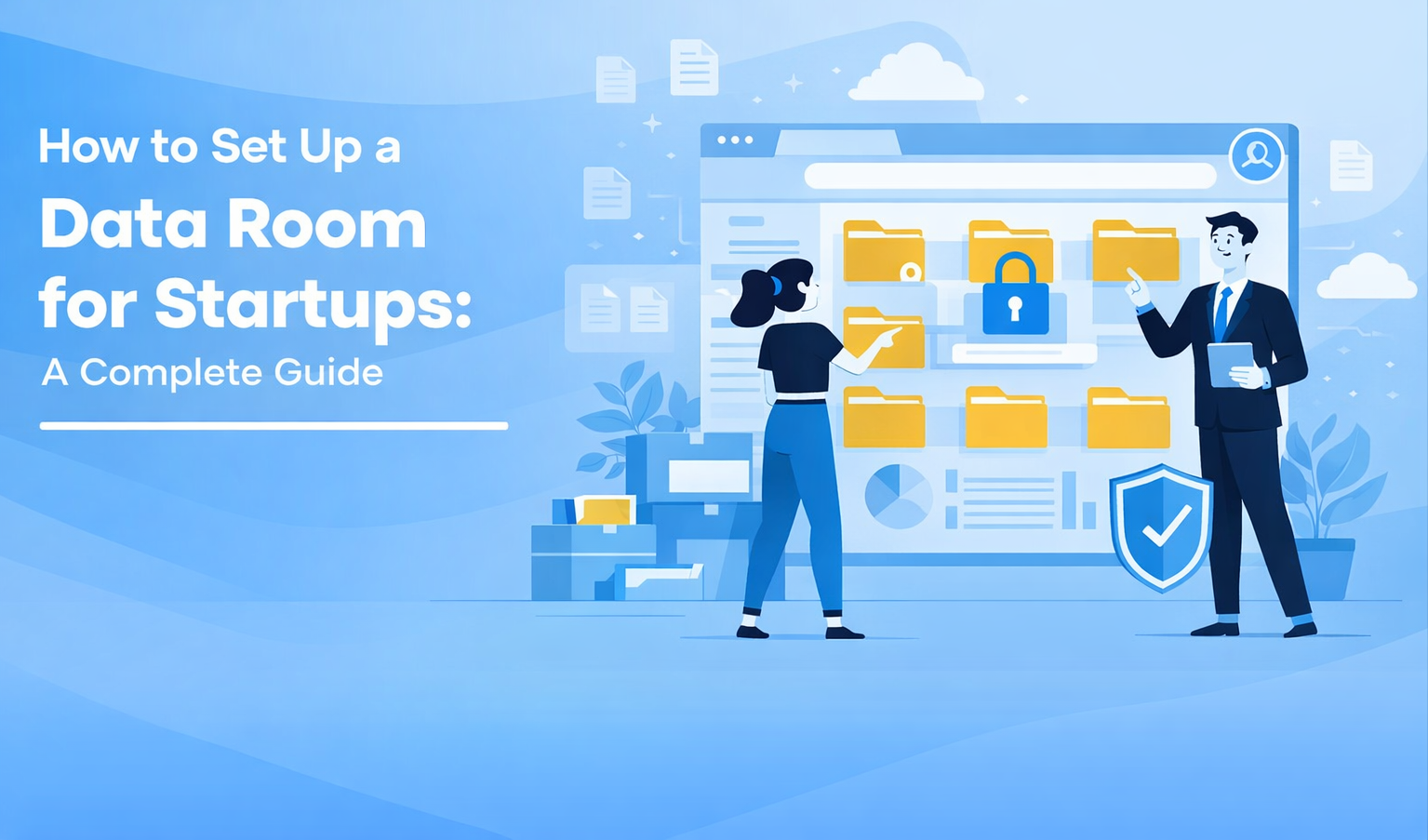
A data room is a secure digital space where startups store and share sensitive business documents with investors, buyers, or partners. Startups often utilize data rooms during fundraising rounds or mergers and acquisitions (M&A) transactions.
Setting up a data room involves selecting the right platform, organizing documents into clear folders, and implementing robust security controls. All essential business documents should be easily accessible to stakeholders.
Startups need data-driven approaches to compete in today's market. A well-organized virtual data room demonstrates professionalism and fosters investor confidence by providing transparent access to key company information.
Careful planning helps strike a balance between accessibility and security. Startups must present themselves in the best possible light.
Modern data room platforms include user permissions, document tracking, and compliance tools. These features help startups streamline due diligence.
Properly structured data rooms can lead to faster deal completion and better investor relationships.

Startups should evaluate security standards, features, and pricing when selecting a virtual data room to ensure optimal protection and efficiency. Balance functionality with budget and ensure the platform meets compliance requirements.
Plan to spend 2-5% of your total fundraising amount on data room costs. Consider possible timeline extensions that may result in increased monthly charges.

A clear data room structure streamlines due diligence and fosters investor trust. An organized setup also helps startups present information professionally.
Start with a logical folder hierarchy. Most investors expect 8-12 main categories in a data room.
Standard top-level folders include:
Each main folder should have 3-5 subfolders to keep things simple. For example, Financial Information can include subfolders for statements, projections, and tax returns.
Structure folders the way investors think. They typically review the company's basics first, then examine its legal and financial details. Create a master index document that explains the contents of each folder, helping new users quickly find what they need.
Organize documents within each folder clearly. Group similar files and arrange them by importance or date.
Place the most important documents at the top of each folder. In Financial Information, display current year statements first, followed by older data.
Key organization rules:
Remove duplicate and outdated files. Multiple versions can confuse reviewers.
Use consistent formatting for all documents. Data management best practices show that organized data needs clear documentation.
Consistent file naming helps users find documents quickly. Set naming rules before uploading anything.
Effective naming conventions include:
For example: "2024-12-15_Employment_Agreement_CEO_v2.pdf" clearly describes the document. Avoid special characters like #, &, or % in file names. These can cause issues with some data room platforms.
Folder names should be clear and short. Use "Intellectual Property" instead of vague names like "IP Stuff."
Hierarchy depth guidelines:
Test the folder structure with your team before sharing with investors. If your team struggles to locate files, investors will likely face similar challenges.

A complete data room includes financial records, legal agreements, market analysis, and team information. These documents help investors evaluate your startup’s performance, legal status, market position, and structure.
Financial statements are the backbone of a startup data room. Include profit and loss statements, balance sheets, and cash flow statements for the past three years. Add monthly financial reports from the current year for extra transparency.
Financial projections indicate growth potential, so include forecasts for the next three to five years, along with clear assumptions. Break down revenue projections by product, customer segment, or region. Tax returns and audit reports add credibility to the financial data.
Include bank statements from the past 12 months to show cash management. Budget vs. actual reports highlight how well your team forecasts and controls expenses.
Explain any significant differences between projected and actual numbers.
Contracts with customers, suppliers, and partners need careful organization. Include all active agreements, major expired contracts, and standard templates.
Employment agreements, consultant contracts, and NDAs protect your company. Store these with clear names for easy access.
Intellectual property documents prove asset ownership. Include patent applications, trademark registrations, copyright filings, and invention assignments.
Add trade secret policies and confidentiality procedures to show IP protection. Corporate documents like articles of incorporation, bylaws, and board resolutions establish your legal foundation.
Keep all amendments and updates in order. Include compliance certificates, licenses, and permits to show regulatory adherence. Include relevant industry certifications and quality standards.
Market research supports your business opportunity. Add industry reports, competitive analysis, and customer surveys. Third-party research from reputable firms is especially valuable. Customer interviews, focus group results, and user testing data show product-market fit.
Include both positive and negative feedback, along with plans for improvement, and add competitive intelligence documents that cover both direct and indirect competitors. Analyze pricing, market position, and advantages. Add SWOT analyses and market share information.
Include business plans, pitch decks, and marketing materials to show your strategy. Organize multiple versions by date to show progress.
Add sales data, acquisition costs, and retention metrics to show traction. Pipeline reports and conversion rates by channel are also helpful.
The cap table shows ownership and equity distribution. Include current cap tables, option pool details, and vesting schedules. Document all equity grants and exercises, including the dates. Employee stock option plans and incentive programs attract investors, so provide all related documents.
Team resumes highlight key qualifications and experience. Add organizational charts to show structure and reporting lines.
List advisory board agreements and consultant arrangements. Include all advisors, their equity stakes, and their contributions.
Add the employee handbook, compensation policies, and benefits information. Include diversity metrics and retention rates to show your company culture.
Strong data room security depends on user access controls, encryption, and monitoring systems. Startups must understand their risks and how those affect compliance requirements.
Startups need to set up different permission levels for investors, advisors, and team members. The data room should allow granular file permissions that control who can view, download, or print specific documents.
Most data rooms offer role-based access controls. These allow companies to create investor groups with varying access levels. Series A investors might see financial projections, while seed investors only view pitch materials.
Two-factor authentication adds an extra layer of security. Users must enter a code sent to their phone, along with their password, which prevents unauthorized access even if someone steals login credentials.
Time-based access controls automatically expire permissions after set periods. Companies can grant 30-day access to potential investors during the due diligence process. The system removes access automatically when the period ends.
Key permission settings include:
Data encryption protects files both in storage and during transfer. The data room should utilize AES-256 encryption, which banks and government agencies rely on to protect sensitive information.
Files stay encrypted on the server at all times. When users download documents, encryption protects the data during transfer, preventing hackers from reading stolen files.
Watermarks add visible text or logos to the documents users view. They typically show the user's name, email, date, and time, discouraging users from sharing documents inappropriately.
Dynamic watermarks change based on the viewer of the document. If someone screenshots or photographs a document, the watermark identifies the source. Some systems add transparent watermarks that become visible when the content is copied.
Secure document sharing requires additional protections, such as:
Audit trail systems track every user action within the data room. They record login times, document views, downloads, and time spent on each file. This data helps companies understand investor interest and compliance needs.
Monitoring is helpful for compliance purposes when companies need to show the data they’ve gathered. Detailed logs demonstrate proper data handling to regulators and stakeholders.
The audit system should capture specific metrics. These include the documents investors spend the most time reviewing. It also shows geographic locations of access attempts and failed login attempts.
Important tracking features include:
Data protection regulations put pressure on startups to build compliant products and services. Different industries and regions have specific requirements for handling sensitive information.
The General Data Protection Regulation (GDPR) affects any startup with European investors or customers. The regulation requires explicit consent for data processing and grants users the right to request the deletion of their information. Data rooms must support these requirements.
SOX compliance applies to public companies and those planning IPOs. The regulation requires strict financial record-keeping and access controls. Tech startups face compliance challenges that require tailored training and technical support.
Compliance requirements often include:
The data room provider should offer compliance certifications, such as SOC 2 Type II and ISO 27001, to demonstrate that they adhere to industry security standards.
Setting up a data room involves specific document organization, security protocols, and criteria for selecting a provider. Budget constraints and funding stage requirements also influence how startups structure and maintain their virtual repositories.
A startup's data room should contain financial statements, including profit and loss statements, balance sheets, and cash flow projections for the past three years.
Legal documents form another critical component, encompassing articles of incorporation, bylaws, material contracts, and intellectual property registrations.
The business plan and pitch deck provide investors with strategic context. Market research, competitive analysis, and customer data demonstrate market validation and growth potential.
Employee agreements, cap tables, and stock option plans reveal the company's human resources structure. Tax returns and audit reports complete the financial transparency requirements.
Technical documentation becomes essential for technology startups. This documentation includes product specifications, development roadmaps, and any proprietary technology details.
Security certifications, such as SOC 2 Type II and ISO 27001, ensure enterprise-grade protection. Multi-factor authentication and granular permission controls protect sensitive documents from unauthorized access.
Document watermarking and download restrictions prevent information leakage. Activity tracking logs show which investors viewed specific documents and for how long.
User-friendly interfaces reduce friction during due diligence processes. Mobile compatibility allows investors to review materials from any device.
Bulk upload capabilities and drag-and-drop functionality streamline document organization. Version control ensures investors always access the most current information.
Pricing transparency helps startups budget effectively. Some providers offer startup-specific pricing tiers or limited-time promotions for early-stage companies.
Free trials from established providers allow startups to test functionality before committing funds. Many virtual data room providers offer 30-day trials with full feature access.
Startup-specific pricing plans offer significant cost reductions compared to enterprise packages. Some providers offer pay-per-project models instead of monthly subscriptions.
Choosing the right analytics tool helps startups optimize their data infrastructure spending. Evaluating different platforms ensures the best value for specific needs.
Document preparation reduces provider costs by minimizing the time spent in premium data rooms. Organizing files in advance and removing duplicates reduces storage requirements.
Negotiating with providers often yields discounts for early-stage companies. Many vendors provide reduced rates in exchange for case studies or testimonials.
The logical folder hierarchy begins with broad categories such as "Financial," "Legal," "Business," and "Technical." Subfolders within each category provide specific document types.
Clear naming conventions use consistent date formats and descriptive titles. Files should indicate version numbers and creation dates to prevent confusion. One-page executive summaries at the top level provide quick overviews of detailed documents, helping investors navigate complex financial models or legal agreements.
Frequently requested documents, such as the pitch deck, financial summary, and cap table, appear in a dedicated "Quick Access" folder. The index documents list all materials with brief descriptions, which helps investors locate specific information quickly without having to browse multiple folders.
Seed-stage data rooms focus on market opportunity and the founding team's credentials. Financial projections and basic legal documents suffice at this early stage.
Series A requirements expand to include detailed financial models and customer traction data. Operational metrics and competitive positioning become more critical.
Later funding rounds demand comprehensive audit trails and detailed compliance documentation. Revenue recognition policies and enterprise sales contracts require greater scrutiny.
Regular updates ensure the currency of documents throughout the fundraising process. Stale information raises doubts among investors about a company's organization and attention to detail.
Access permissions should reflect the sensitivity of the funding stage. Early investors may have broader access than later-stage participants, who tend to focus on specific areas.
As you prepare for fundraising or strategic transactions, building an investor-ready data room helps you present your startup with clarity, professionalism, and confidence. A well-structured data room can expedite due diligence, foster investor trust, and help early-stage companies close deals with fewer delays and surprises.
FirmRoom provides startups with an intuitive, secure virtual data room built to simplify every step of the process. With SOC 2 Type II–certified security, granular permissions, real-time activity analytics, and lightning-fast performance, FirmRoom helps founders manage due diligence quickly and efficiently, without the complexity and high costs associated with legacy platforms. Bulk uploads, smart indexing, dynamic watermarking, and unlimited users provide startups with the tools to protect sensitive data and close deals more efficiently.
Investors care most about founders and traction, but they also expect a high degree of reliability, transparency, and ease of use when it comes to data room logistics. With FirmRoom, startups can rest assured that their virtual data room won’t let them down.
Ready to build a data room that wows investors and helps you close deals faster? Book a FirmRoom demo today.